Leila Keivan
Multidisciplinary artist based in Germany. Her practice works with fictional archives, images, installation, and video to examine how inherited disturbance moves across past, present, and future through fragments, unstable evidence, and the shifting position of the observer. In her work, what appears as evidence is questioned, staged, and made uncertain.
Website design and content: Leila Keivan
© 2026 Leila Keivan. All rights reserved.
WORKS
Current ProjectLisa, bleib hier, wir kommen jeden Tag zurück
Ongoing research-based project, archive, interviews, video and
public participation, 2025–2026Selected WorksLiebevoll, L.
Graveless Lovers
Sun of the Midnight
Um Mitternacht: Wenn eine Epoche endet.
No One Can Resist the Light
Perfect Storm
14.10.1964, Valencia
Narration of the Lost Moment
Shores of the Body
Lisa, bleib hier, wir kommen jeden Tag zurück.An ongoing research-based artwork on the former inner German border zone, inherited DDR memory, migration, and the reconstruction of belonging after political and personal landscapes have shifted.
Through oral history, archival material, collected objects, moving image, and public participation, the project asks how memories of disappeared places and imagined futures continue to be carried, altered, and shared.
Lisa, bleib hier, wir kommen jeden Tag zurück is an ongoing research-based artwork that approaches the former inner German border zone as a site where historical rupture, inherited memory, and contemporary experiences of displacement intersect.The project brings together archival material, oral history, collected objects, moving image, and public participation to examine how a sense of belonging is produced after a place, a political promise, or an imagined future has disappeared. Rather than treating the archive as a stable repository of evidence, the work understands it as a fragile and contested structure: a place where memory is preserved, altered, withheld, and reassembled.The project moves between memories of the second DDR generation and the experiences of migrant women living in Thuringia. These perspectives are not collapsed into one another, but placed in relation through shared questions of loss, return, marginalisation, and the reconstruction of home. What remains after a world has shifted? How do people carry places that are no longer accessible in the same form? And how can private fragments become part of a collective, yet unstable, public memory?The work unfolds through three connected forms: a short film composed from interviews, landscapes, and archival material; a book-like herbarium of “soft inheritance” made from images, texts, objects, and personal fragments; and a living public archive that gathers subjective memories, imagined utopias, and contributions from the public.
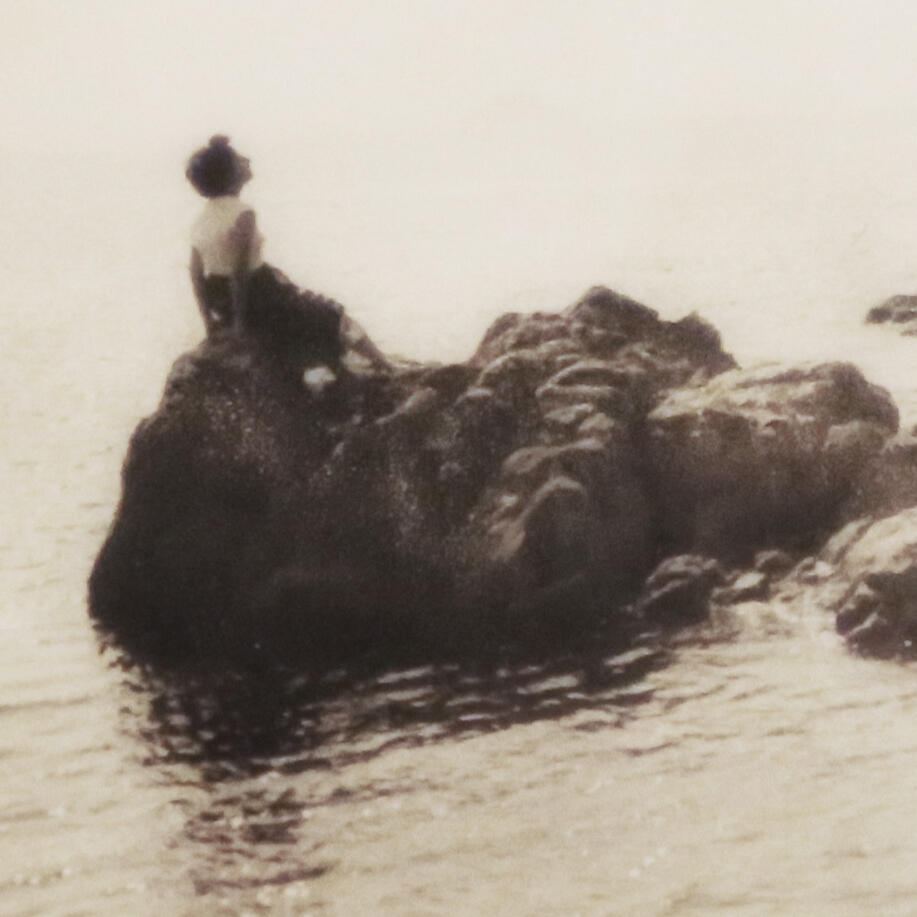
Liebevoll, L.Weimar, Germany
August 2023 – July 2024
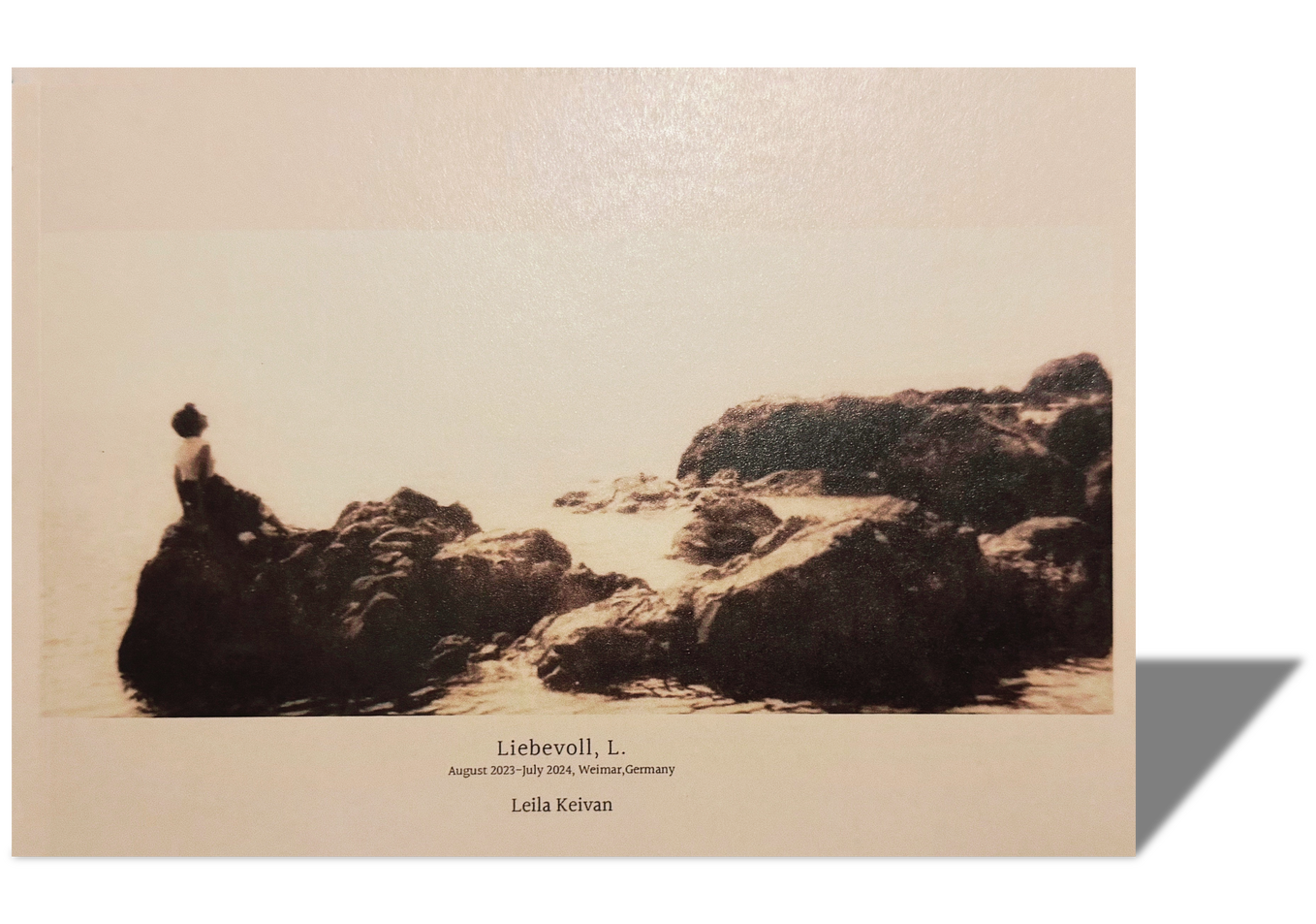
Liebevoll, L. is a conceptual postcard project based on the artist’s personal archive of photographs from Iran, dating from the 1960s to the 1980s.Over the course of one year, 100 handwritten postcards were released each month across Weimar. Each card carried an imagined message connected to an unknown figure from the archive. Together, they formed a quiet chain of memories: partly personal, partly fictional, and partly left for the person who found them.Placed in public spaces, the postcards created small encounters between distant lives and the present-day city. Far from the place where the images originated, the project invited passers-by to pause, read, and enter a fragment of someone else’s possible story.


Realised with the support of the Kreativfonds of Bauhaus-Universität Weimar
Graveless Lovers
Bauhaus Hybrid Atelier, Weimar, Germany, 2024
Voice: Rand Ibrahim, Raisa Bosich, Hossein Motahar, Leila Keivan
Sound composition: Rico Graupner
Book design: Gabriella Para
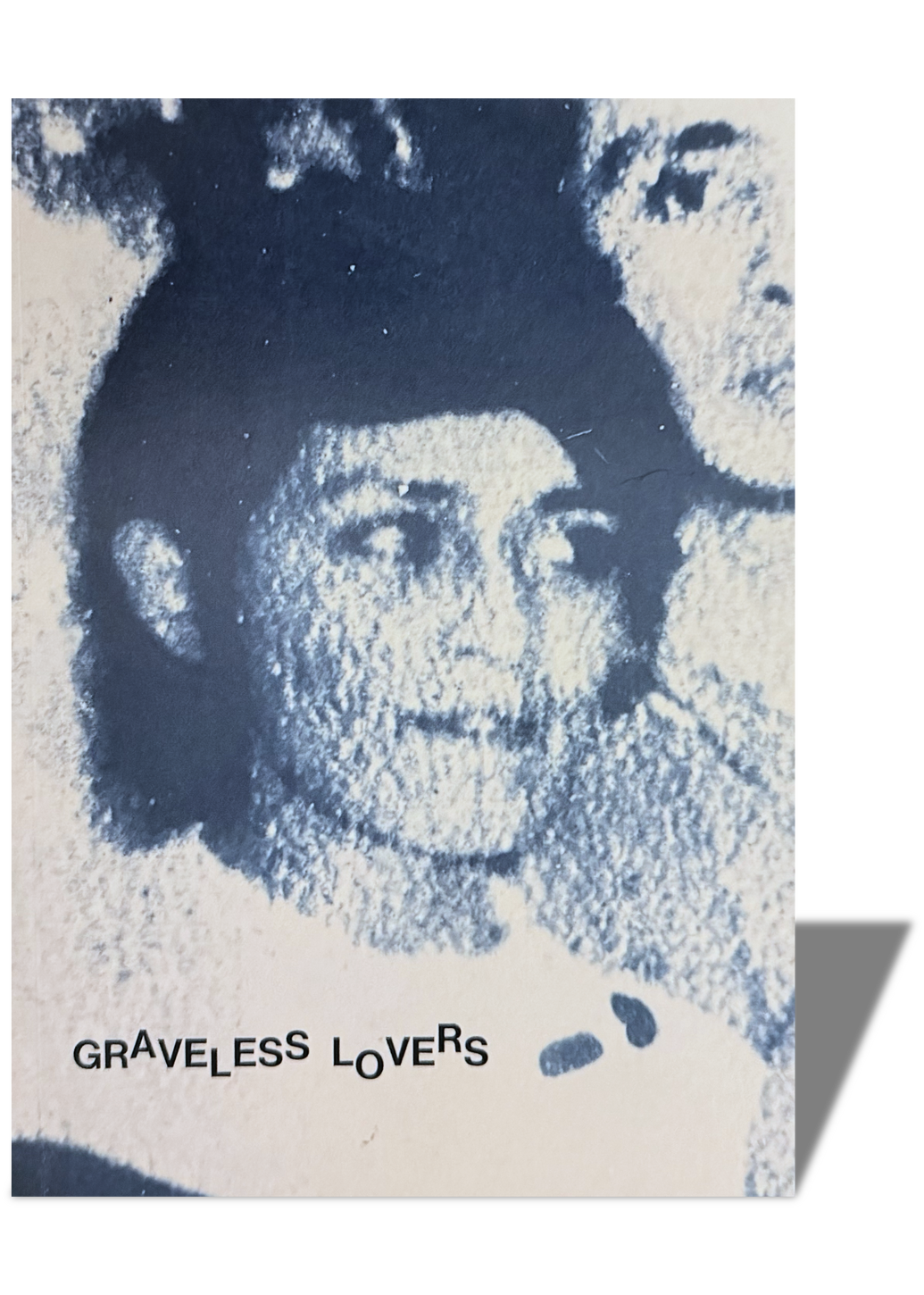
Graveless Lovers is an artistic research project on denied disaster, inherited trauma, and the persistence of unresolved loss. The project examines how human-caused disasters, especially under oppressive political systems, continue to affect individuals, families, communities, and landscapes when they are suppressed, minimized, or left unacknowledged.
Rather than treating trauma as something fixed in the past, Graveless Lovers approaches it as a living archive: something carried through bodies, memories, images, nature, and silence. When a disaster is denied, it does not disappear. It grows, repeats, and is transmitted across generations. The project asks how unburied grief can be preserved, narrated, and confronted when official systems fail to recognize it.
Through visual and research-based artistic practice, the work explores the fragile relation between victim, witness, survivor, and litigant. It reflects on the need for acknowledgment, truth-telling, and justice as ways of interrupting cycles of denial and suffering. The degraded family photograph in the book can function as a strong visual anchor for this project, connecting personal memory with collective trauma.
Shores of the body
Video installation
ACC Galerie, Weimar, Germany, February 2024
Technical and instructional support: Rand Ibrahim
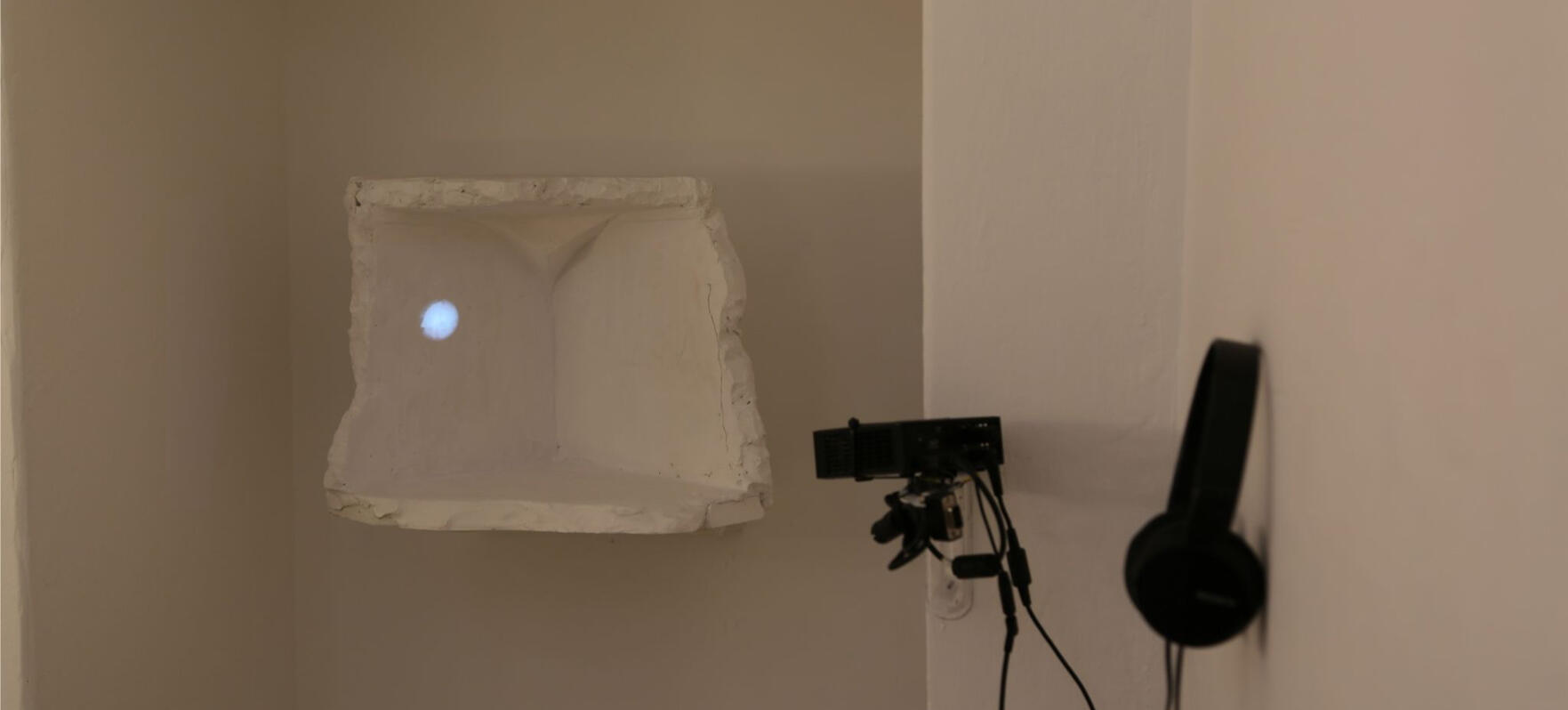
Birds build nests for care, not permanence. A nest is made for laying eggs, protecting fragile life, and holding a temporary state. It can also be abandoned when disturbed, when its purpose is lost, or when survival requires another place.
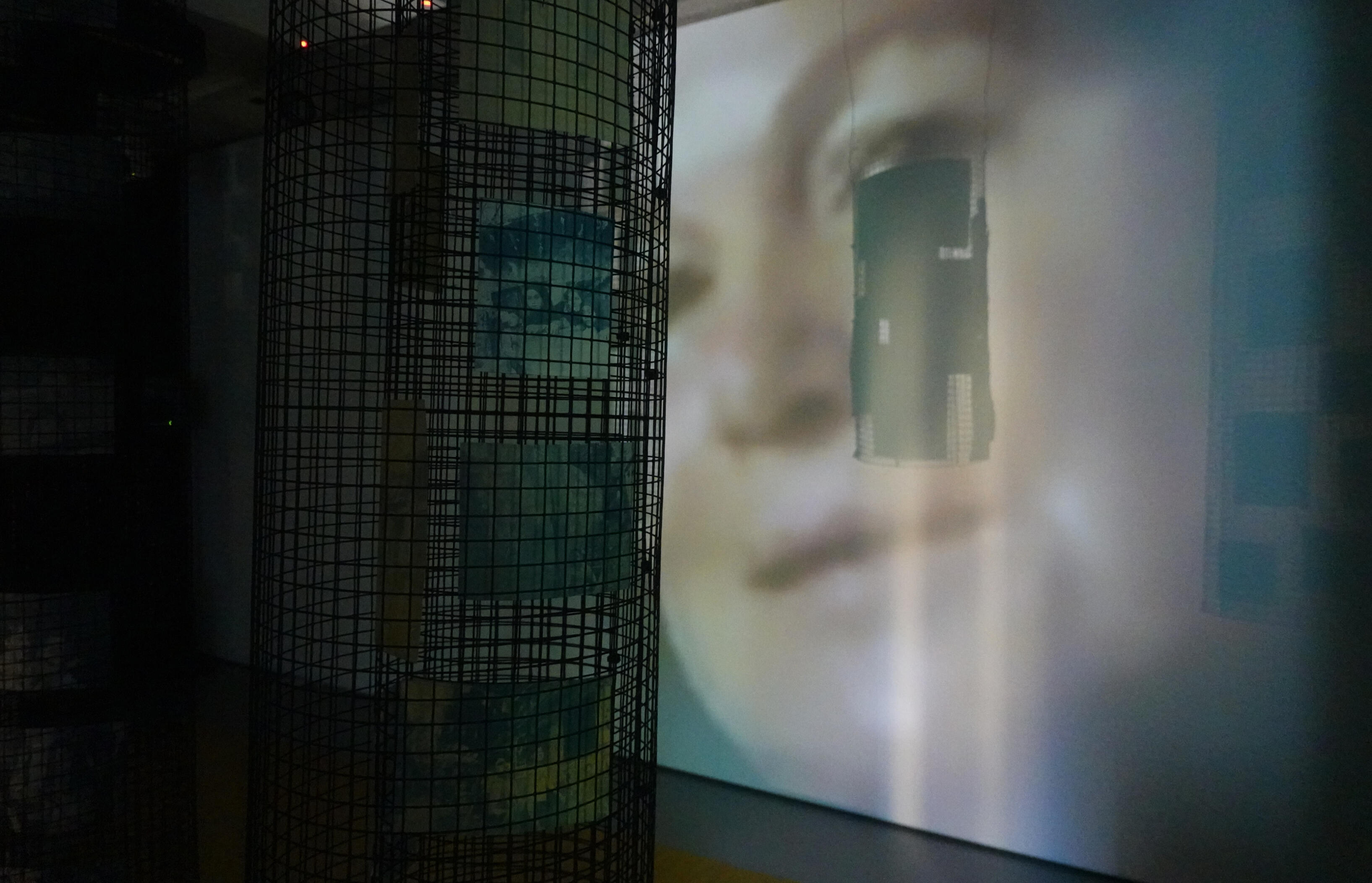
Shores of the Body begins from this unstable relation between nesting, returning, and leaving again. The work reflects on home not as a fixed location, but as a fragile structure made of habits, orientation, bodily memory, and repeated gestures: using the same old mug, walking without needing an address, returning to familiar routes, or hoping to meet someone who is no longer alive.
The video installation is made from the artist’s childhood photographs and projected onto a reconstructed corner of the house where she was born, a house that no longer exists. Through this projection, the absent home becomes temporarily visible. The images do not restore the past; they return as fragments, searching for a surface on which to appear.
The title refers to the body as a shoreline: a place where memory arrives, withdraws, and leaves traces behind. Like a nest, the body holds what cannot stay. Like a shore, it receives the remains of places, people, and gestures that have disappeared.
Shores of the Body asks what it means to return to a place that can no longer be entered, and whether memory can become a temporary shelter when home itself has vanished.
14.10.1964, Valencia
Collaborative performance / multi-sensory installation
Public Art Garage Residency, Barcelona, Spain, November 2023
In collaboration with: Eunji Lee, Rand Ibrahim, Stefan Ralevic, Teresa Fischer
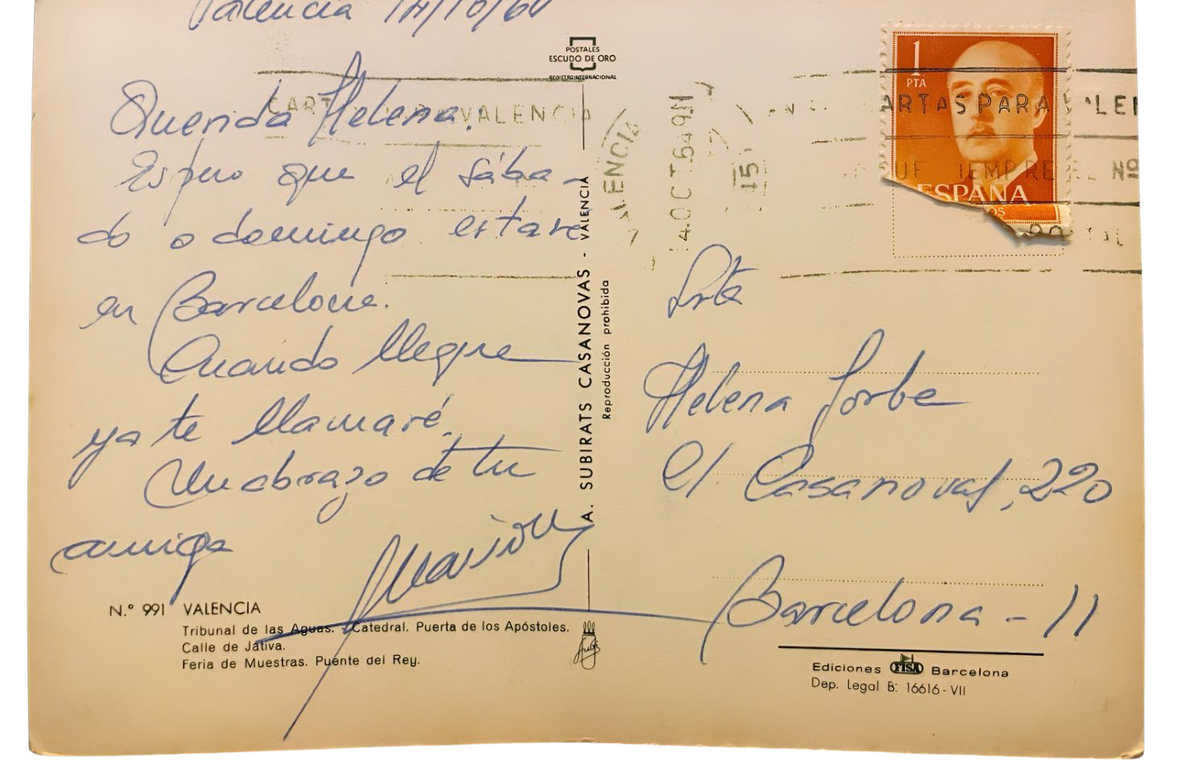
14.10.1964, Valencia is a collaborative art project that begins with a found postcard discovered in a second-hand market in Barcelona on November 2, 2023. Written in Valencia in 1964, the postcard carries a brief and mysterious promise of a future meeting. Its uncertain destination, unknown sender, and unresolved message become the starting point for a collective response across time, language, and imagination.
The project treats the postcard as a small surviving fragment of human relation. Rather than trying to solve its mystery, the artists enter into dialogue with it. They ask what remains of a message when its context is lost, whether the promised meeting ever took place, and how a private sentence from the past can still demand attention in the present.
Each collaborator was invited to spend time with the postcard, examine its traces, and write a response to the person addressed in it. These replies were written in the artists’ mother tongues, allowing different languages, rhythms, and emotional distances to gather around the original message.
In the final performance, the letters are read simultaneously. As the voices overlap, full comprehension becomes impossible. What remains is not a single narrative, but an accumulation of fragments: tones, pauses, repetitions, and emotional residues. The work transforms communication into a shared act of listening, where the unheard is not translated, but amplified.
14.10.1964, Valencia creates a fragile bridge between past and present. It asks how forgotten messages continue to move through time, and how small traces of unknown lives can become a space for collective memory, speculation, and care.
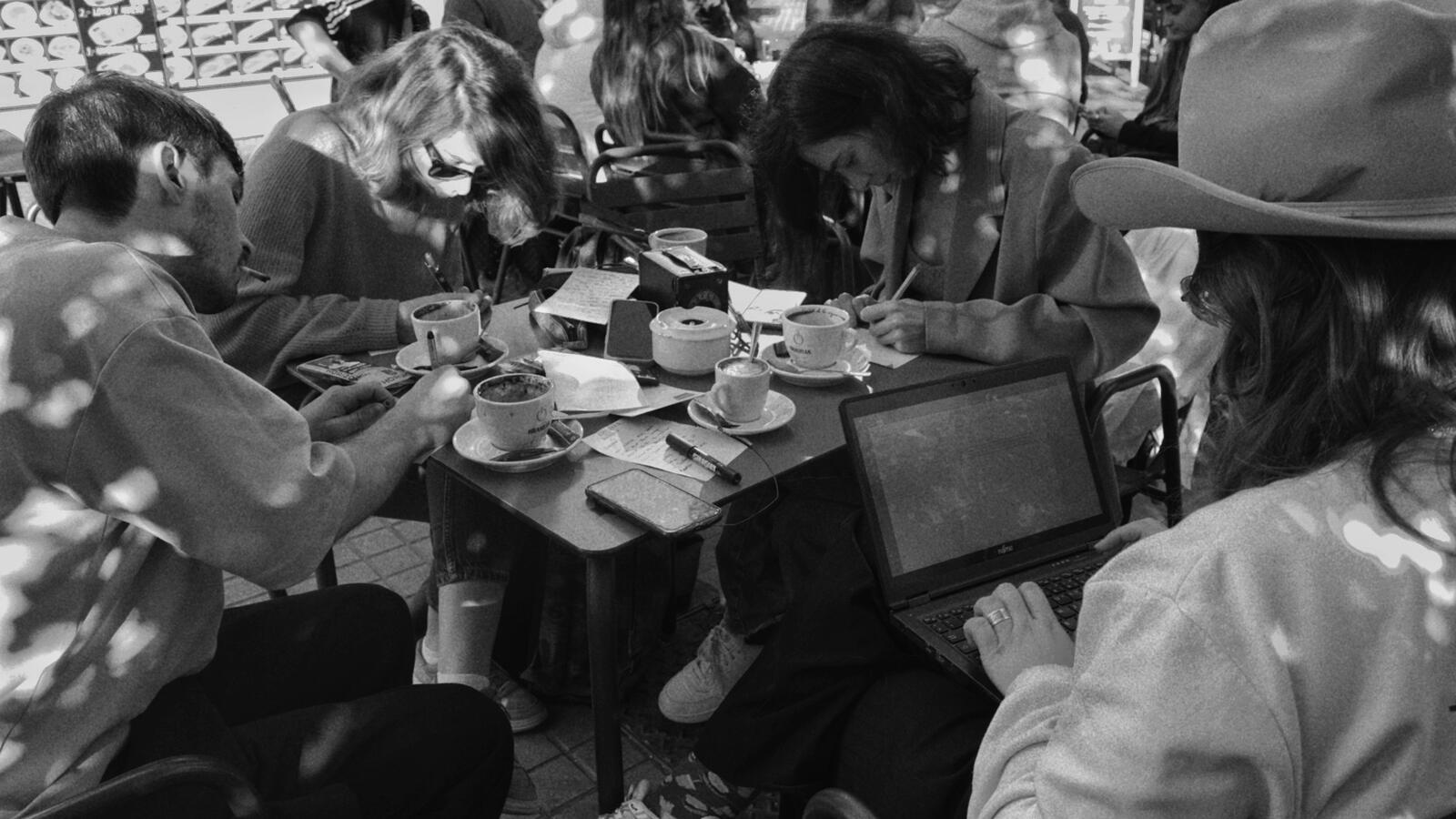
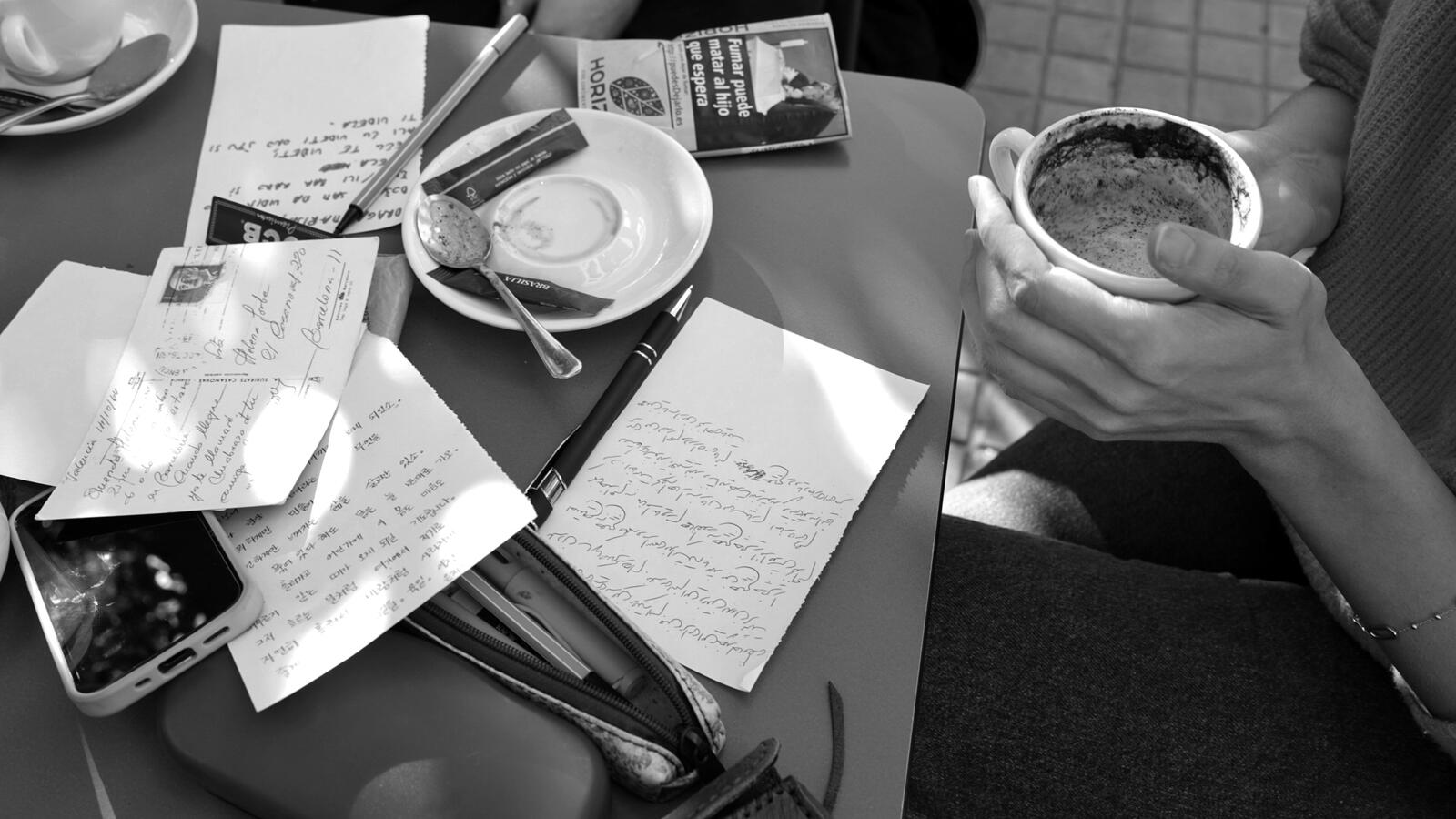
Photo credit: Eunji Lee
Residency funded by Erasmus
Sun of the Midnight
Archival installation
Documentation: Hossein Motahar
Blumenladen, Weimar, 2022
Found and Felt, Hong Kong, 2025
Maxim Gorki Theater, Berlin, 2025
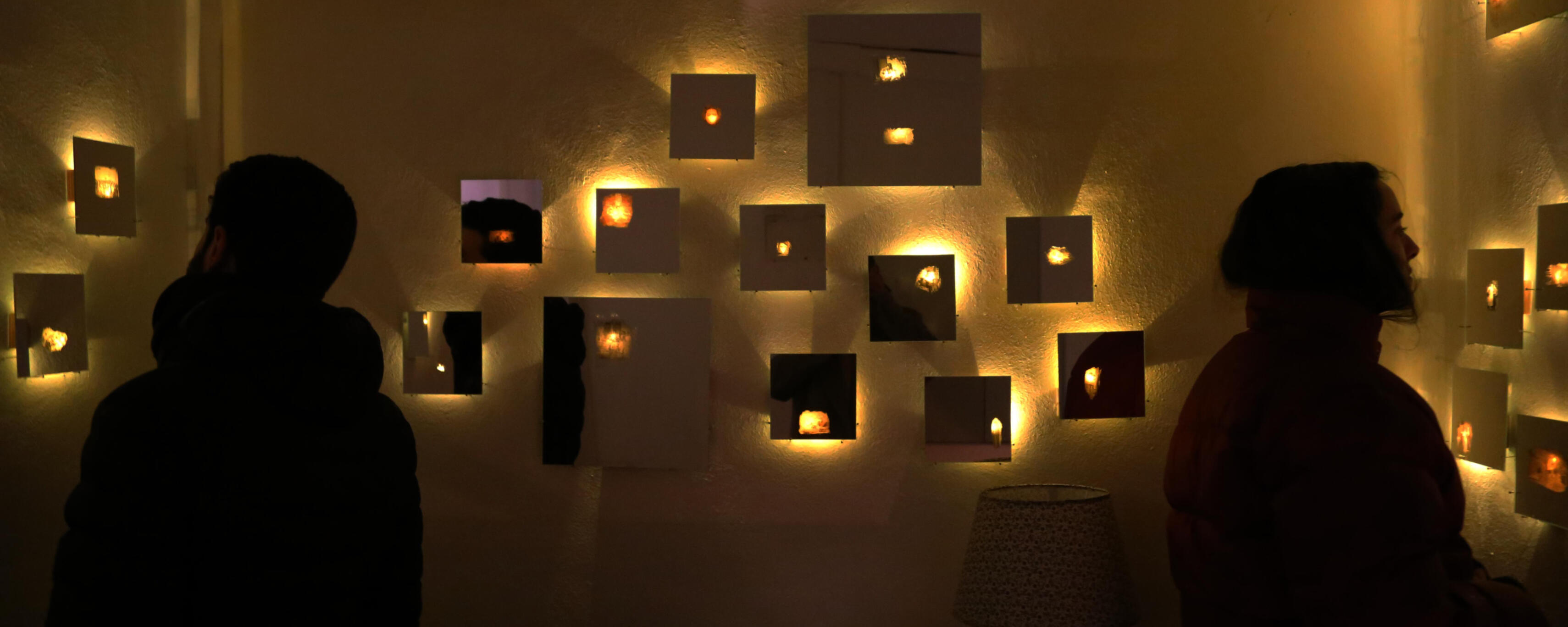
“Sometimes I look at the clock and try to guess your time. I think you’re too afraid to tell me that you miss me, that you want to see me…”Sun of the Midnight is an archival installation composed of mirrors, light, and photographs. The work reflects on the unstable relationship between memory, absence, displacement, and self-perception.
The installation is rooted in Leila Keivan’s personal archive: a collection of photographs of unknown people gathered over five years in Iran. Many of these images capture intimate moments before the 1978 Revolution. Brought to Germany in a small suitcase, the photographs gradually became more than a collection. They began to carry traces of departure, longing, and the shifting meaning of home.
By placing archival images in relation to mirrors and focused light, the work creates an encounter between the viewer’s reflection and the photographed figures. The viewer becomes both observer and part of the image field. In this fragile space, anonymous lives are brought into dialogue with the present, while memory appears not as something fixed, but as something that continues to look back.


Um Mitternacht: Wenn eine Epoche endet.
Goethe-Nationalmuseum, Weimar, Germany, 2025
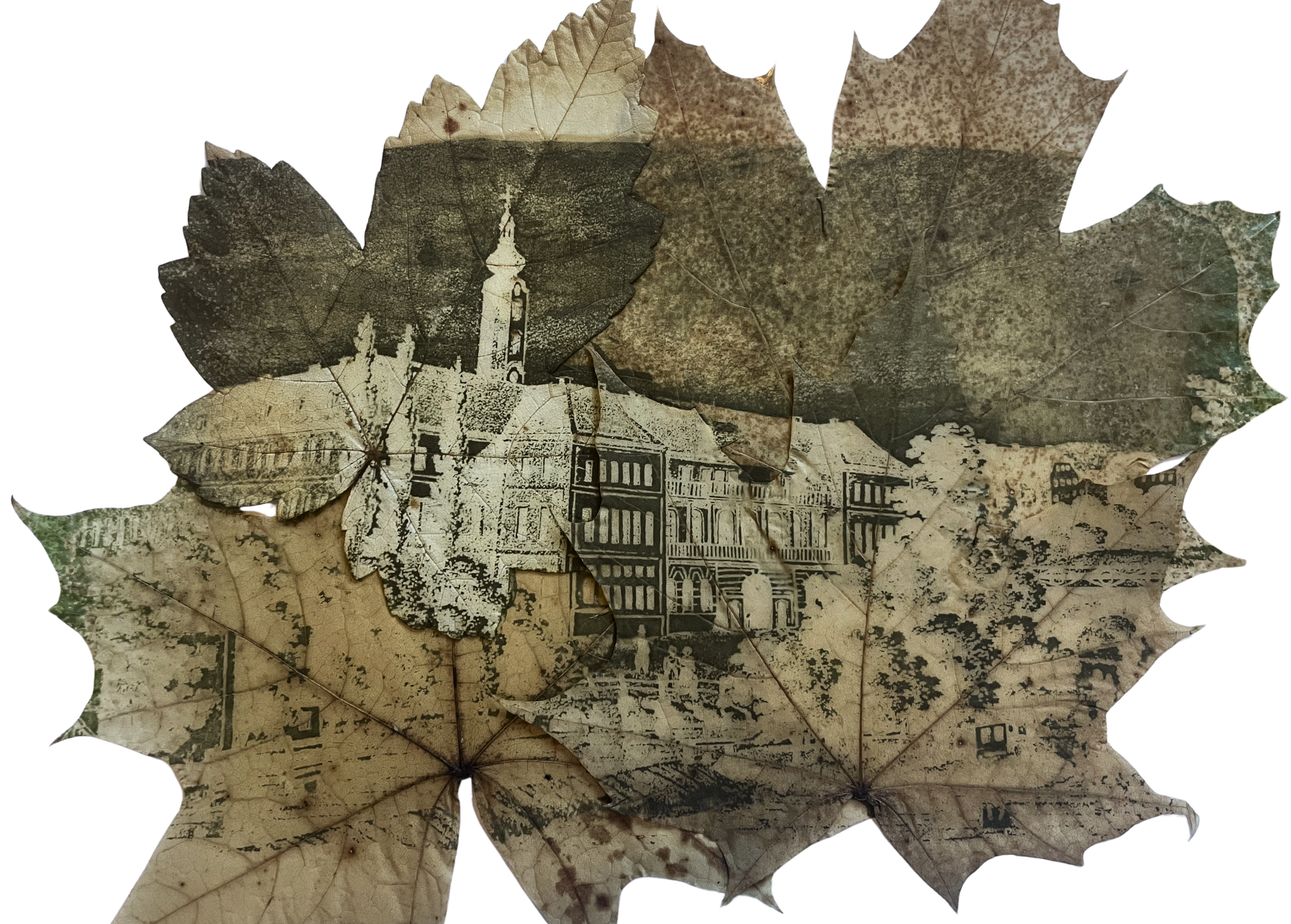
Um Mitternacht: Wenn eine Epoche endet takes the form of a fictional travel diary. It follows a traveler who enters a nameless city that, according to an old sailors’ legend, appears only once every thousand years under the full moon.The city is imagined as a meeting point between Weimar, the city of Goethe, and Shiraz, the city of Hafez. Through this encounter, the work reflects on a life lived between two cultural and emotional geographies: between memory and arrival, departure and return, the place one has left and the place one is still learning to inhabit.When the traveler returns, no one believes that the city exists. She is called a dreamer, someone who has mistaken longing for reality. In response, she begins to collect and present evidence. These fictional proofs take the form of chlorophyll prints: old landscapes of Weimar, extracted from historical drawings and printed onto leaves that grow in the geography of Shiraz.The evidence is fragile, unstable, and alive. It does not prove the city in a factual sense, but reveals the emotional truth of its existence. Weimar appears through Shiraz; memory appears through nature; and the imagined city becomes visible only through the materials that carry traces of both places.In the legend, reaching the city marks the end of one epoch and the beginning of another. Yet this transition does not bring resolution. Instead, it carries a quiet and persistent sadness: the realization that the places once left behind can no longer be found in the same way, and that the new place cannot immediately become one’s own.The traveler belongs only to the city that appears once every thousand years, and now carries its legend as both memory and curse.
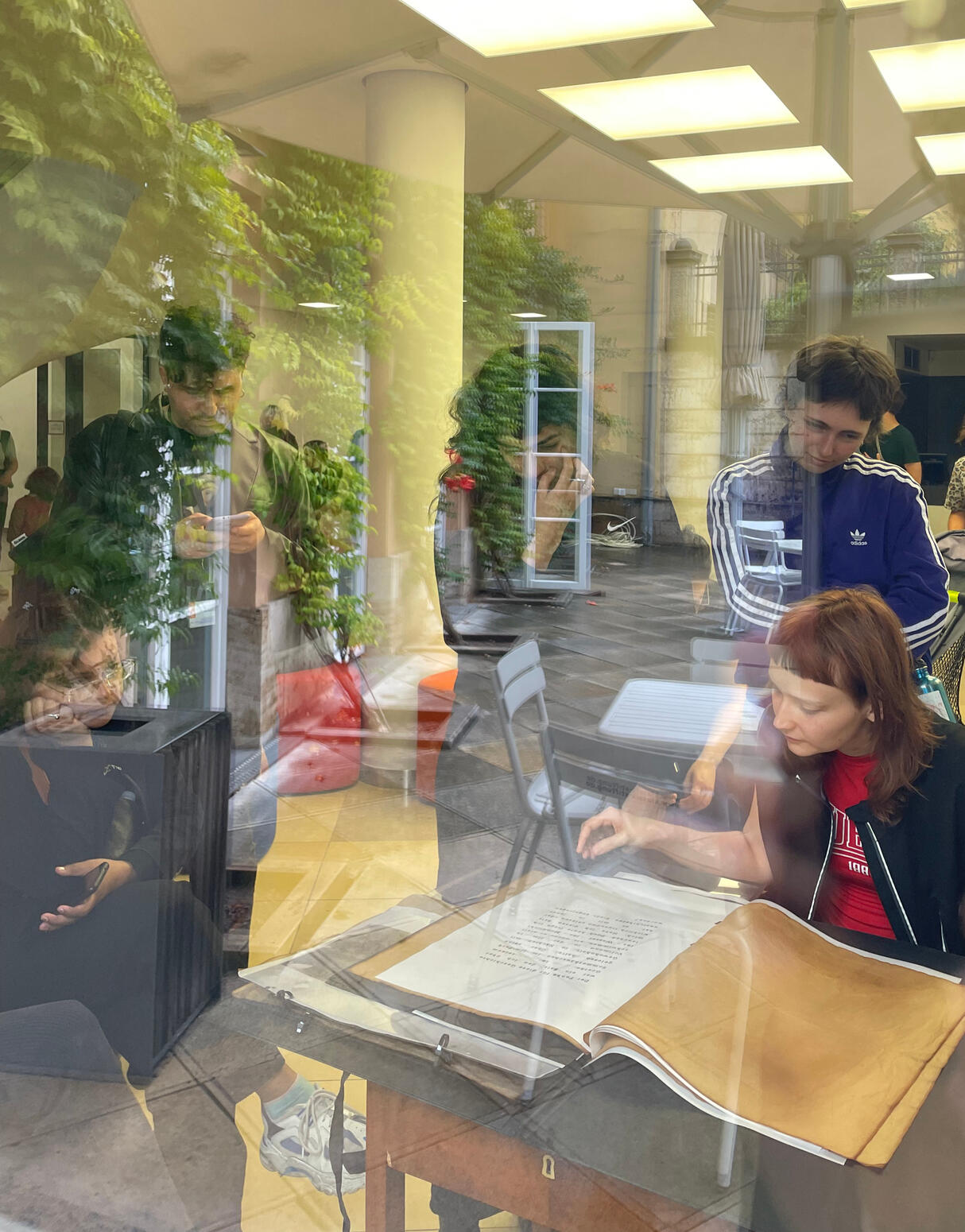
Narration of the Lost Moment
Archival installation
Bauhaus Museum, Weimar, Germany, September 2022
Documentation: Hossein Motahar
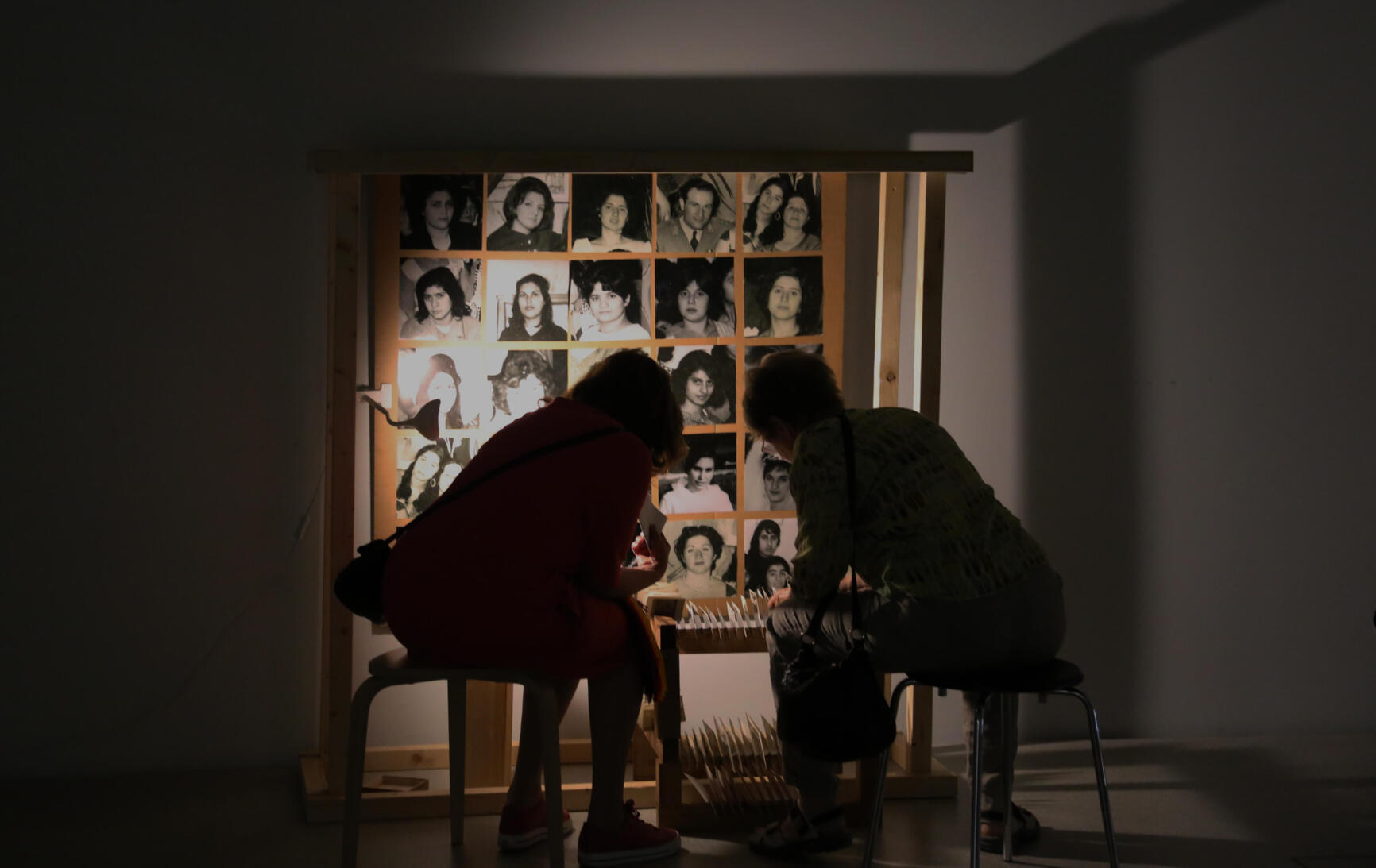
Narration of the Lost Moment is an archival installation that explores touch as a forbidden form of remembering. In archives and museums, the past is often protected by distance: objects may be looked at, but not touched. This work interrupts that rule by inviting the audience into a direct tactile encounter with archival photographs and objects.
The installation asks what happens when the archive is no longer separated from the body. Through touch, viewers encounter fragile traces of unknown lives not as fixed historical evidence, but as surfaces marked by absence, time, and loss. The fingertips become a way of approaching what cannot be fully seen, translated, or recovered.
This encounter is intimate, but also uncertain. Touch does not grant access to the past, nor does it allow the viewer to possess another person’s memory. Instead, it creates a brief physical relation with histories that remain incomplete and unreachable.
By removing the prohibition of contact, Narration of the Lost Moment transforms the archive from a distant visual order into a living and unstable space of attention. The work asks how memory might be activated through the body, and how the remains of unknown lives can be sensed without being fully known.


No One Can Resist the Light
Public intervention
Tehran, Iran, December 2021
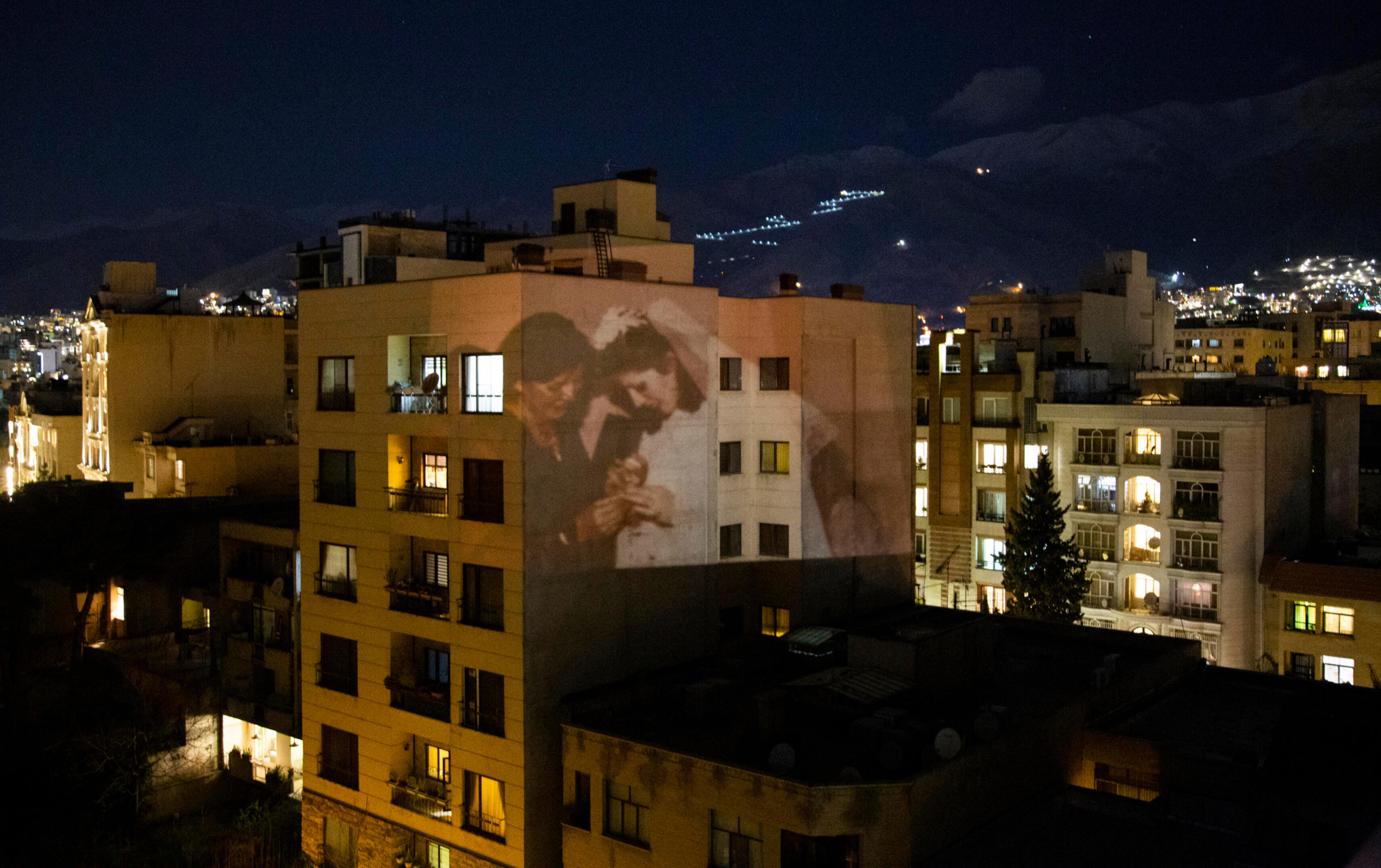
No One Can Resist the Light is a series of site-specific public interventions in which Leila Keivan projects images from her private family archive onto architectural facades in Tehran.
Domestic photographs, usually held within the intimate space of family memory, are enlarged to the scale of the city. Through this gesture, private images enter the public field and temporarily occupy the visual language of urban infrastructure, advertising, and authority.
The work creates a confrontation between personal memory and the controlled visibility of public space. By projecting images of Iranian women onto the city’s surfaces, Keivan interrupts dominant forms of representation and makes visible lives, gestures, and histories that are often simplified, erased, or contained.
Light becomes both medium and resistance. It allows the archive to appear briefly, yet monumentally, across the city. In this act, private memory is no longer hidden or passive; it becomes a luminous presence that insists on being seen.


Perfect Storm
Public space performance
Chemnitz, Germany, January 2022
Performers: Rand Ibrahim, Hala Masri, Katharina Hüttermann, Racheal Thorleifson
Documentation: Carlos Santos
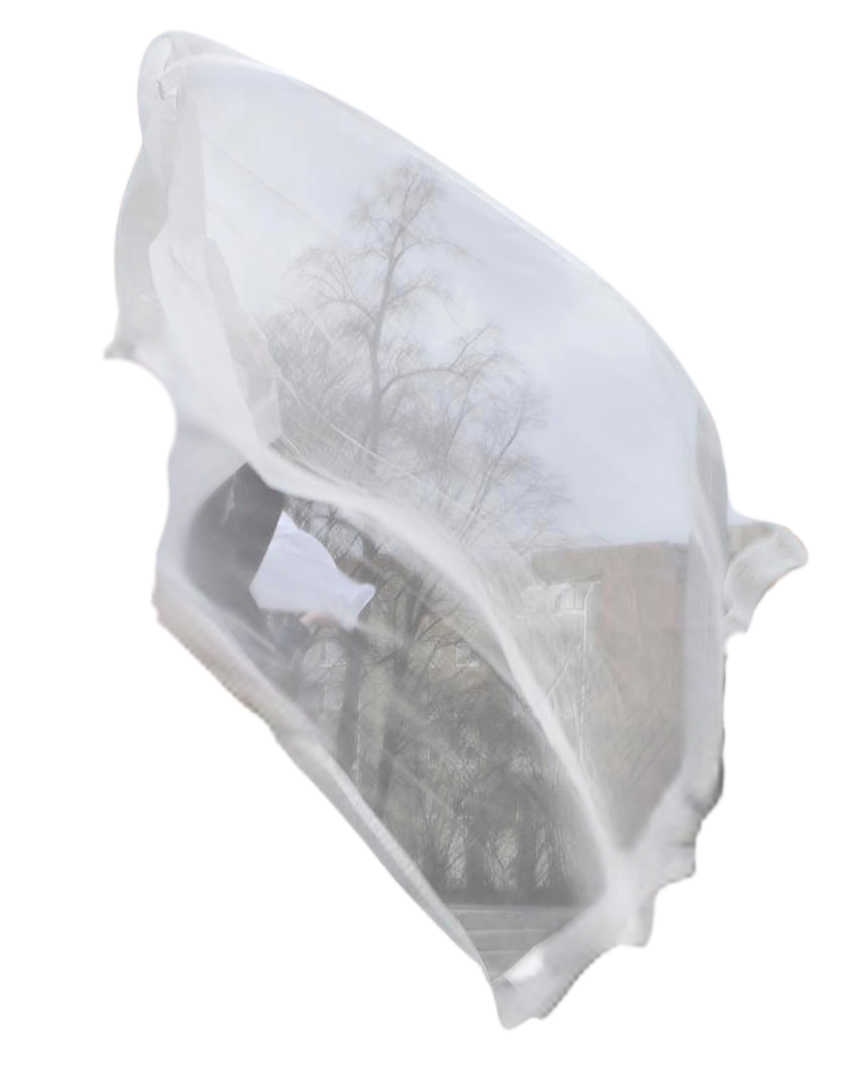
Perfect Storm explores the moment when grief changes perception. The veil emerges from the experience of seeing the world through tears: blurred, softened, painful, but also strangely lighter. In the performance, this altered vision is translated into fabric and movement, allowing the artist to approach the unfamiliar city not by controlling it, but by touching it through vulnerability.
The work begins from an emotional state in which the body continues to move through everyday life, while the eyes reveal what the mind is struggling to contain. Walking, working, crossing streets, and performing daily duties continue, but vision becomes unstable. The body and inner life seem disconnected, almost working separately, yet still cooperate in order to keep moving.
In the performance, fabric moves through the streets like an extension of blurred vision. It becomes a curtain of tears, a temporary shelter, and a fragile surface between the performer and the city. It softens the urban environment without hiding it, creating a relation based not on possession or belonging, but on exposure, uncertainty, and care.
At the center of the work is the question: what if life were lighter? Here, lightness does not mean escape from pain. It refers to the possibility that heaviness, grief, and unfamiliarity might be transformed through movement, wind, fabric, and the body’s attempt to remain present.
Perfect Storm stages home-making as an unfinished and unstable process. It asks how the unknown can be encountered through a damaged visual field, and how a city might become briefly bearable when seen through the fragile veil of tears.

